What is refractive lens exchange? How does it work?
To understand refractive lens exchange, we must understand how the eye works. The eye focuses images from the front of the eye to the back of the eye. Here, the image is captured by the retina and transmitted to the brain.
When we look at the focusing system of the eye, we see two components. The first is the cornea, which is the eye’s outer layer, and the second is the internal lens in the eye, which sits behind the pupil.
Under 40
Before the age of 40, individuals need glasses or contact lenses due to the cornea’s inability to focus light on the retina. In this age group, we use corneal refractive procedures, such as LASIK, to change the shape of the cornea and allow images to focus clearly, without glasses or contact lenses.
Over 40
As we age, the internal lens of the eye changes. When we are young, the lens is completely clear and flexible. This flexibility allows us to focus from distance to near. Unfortunately, due to the natural aging process, this ability doesn’t last forever, as people in their mid-40s or older can attest.
Over time, the lens hardens and becomes dysfunctional, interfering with its ability to focus from distance to near. A condition we call presbyopia. Presbyopia continues to worsen in our 50s and 60s, and we require more powerful reading glasses to see up close. Eventually, the lens becomes cloudy and affects the ability to see clearly. This cloudy lens is what we call a cataract.
Modern cataract surgery
When we remove a cataract, we replace the cloudy lens with a clear, intraocular lens implant. In the past, cataract and lens implant surgery’s goal was merely to replace the cloudy lens. Modern and interocular lens implant surgery, however, enables us to not only replace the cloudy lens with a clear one but also restore a patient’s ability to focus from distance to near. This provides a full range of vision without the need for glasses or contact lenses.
Over the past several years, modern intraocular lens implant surgery has become very safe and effective.
Refractive lens exchange
We now can perform what we term refractive lens exchange. Refractive lens exchange is basically intraocular lens implant surgery for patients in their mid to late forties and older who are presbyopic, but who have not yet developed visually significant cataracts.
In suitable candidates, refractive lens exchange can help to restore the ability to focus from distance to near, and in many cases provide a full range of vision without glasses or contact lenses.
Find out if you’re clinically suitable for vision correction and book your free appointment using our online scheduler, or give us a call on (717) 996-3016.
If you’re serious about clear vision and reducing or eliminating your dependence on corrective eyewear, this is the ideal next step. Not only will it give you the certainty you need regarding the best treatment for you, but it’s also free! Book now.
Share This Story
Find us
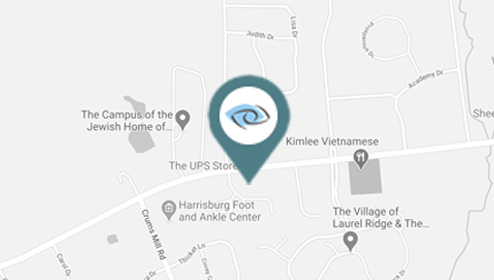
Recognized Leaders in Harrisburg LASIK Eye Surgery